
Constitution
Rothridge
Broadsides
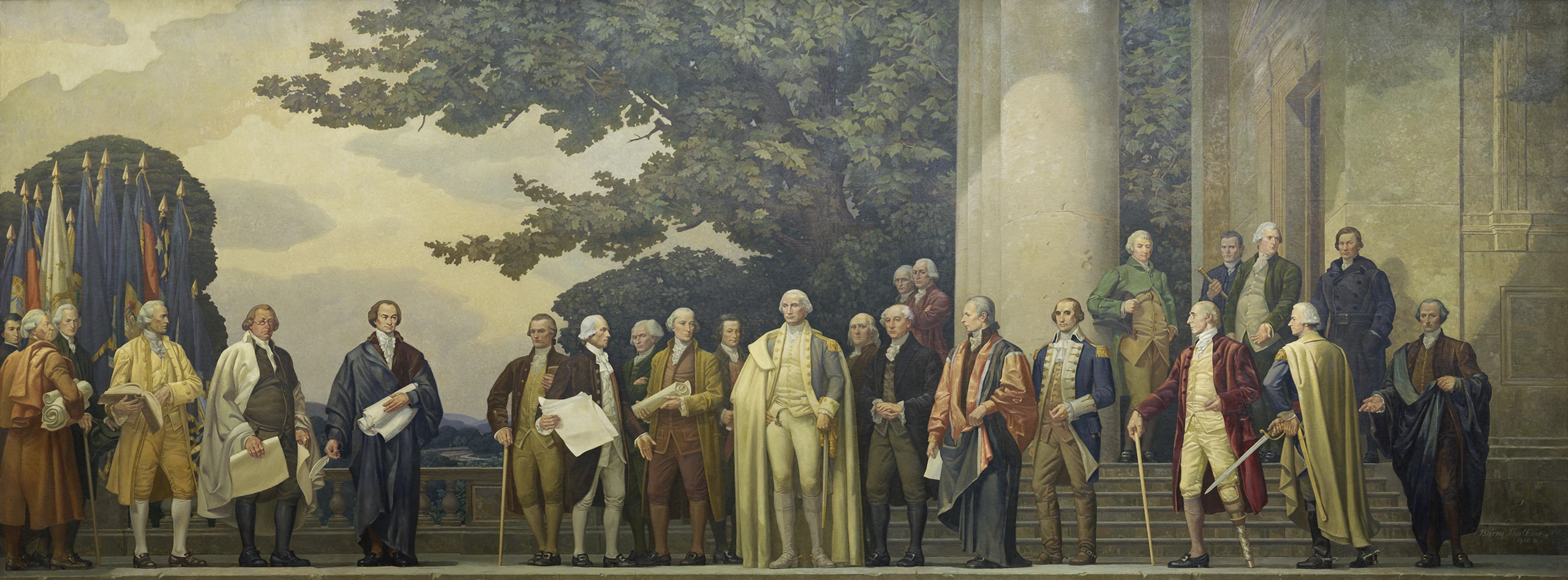
Constitution | Barry Faulkner
National Archives Rotunda, Washington D.C.
The substantial oil-on-canvas mural depicts an allegorical scene of James Madison presenting the Constitution to Convention President George Washington. Twenty-five prominent men from the original Thirteen States are portrayed.
1936 | 14' x 37.5'


Constitution
Broadside Print
$250
• Free Shipping
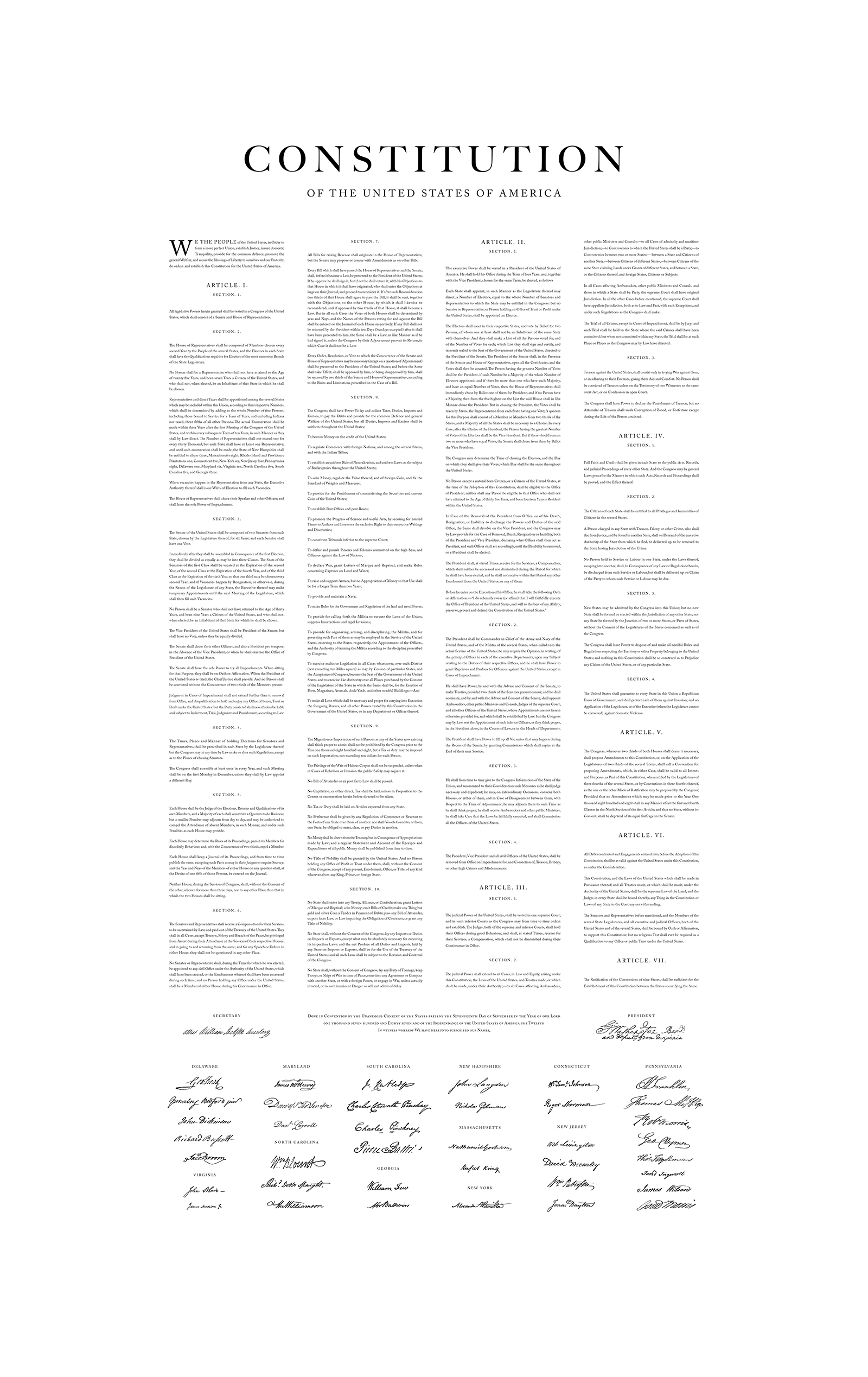
Delegates described by Thomas Jefferson as “an assembly of demigods” gathered in 1787 at Independence Hall to create for their country and posterity “a more perfect union”. Their words became the Constitution of the United States of America and are now presented as a Rothridge Broadside.
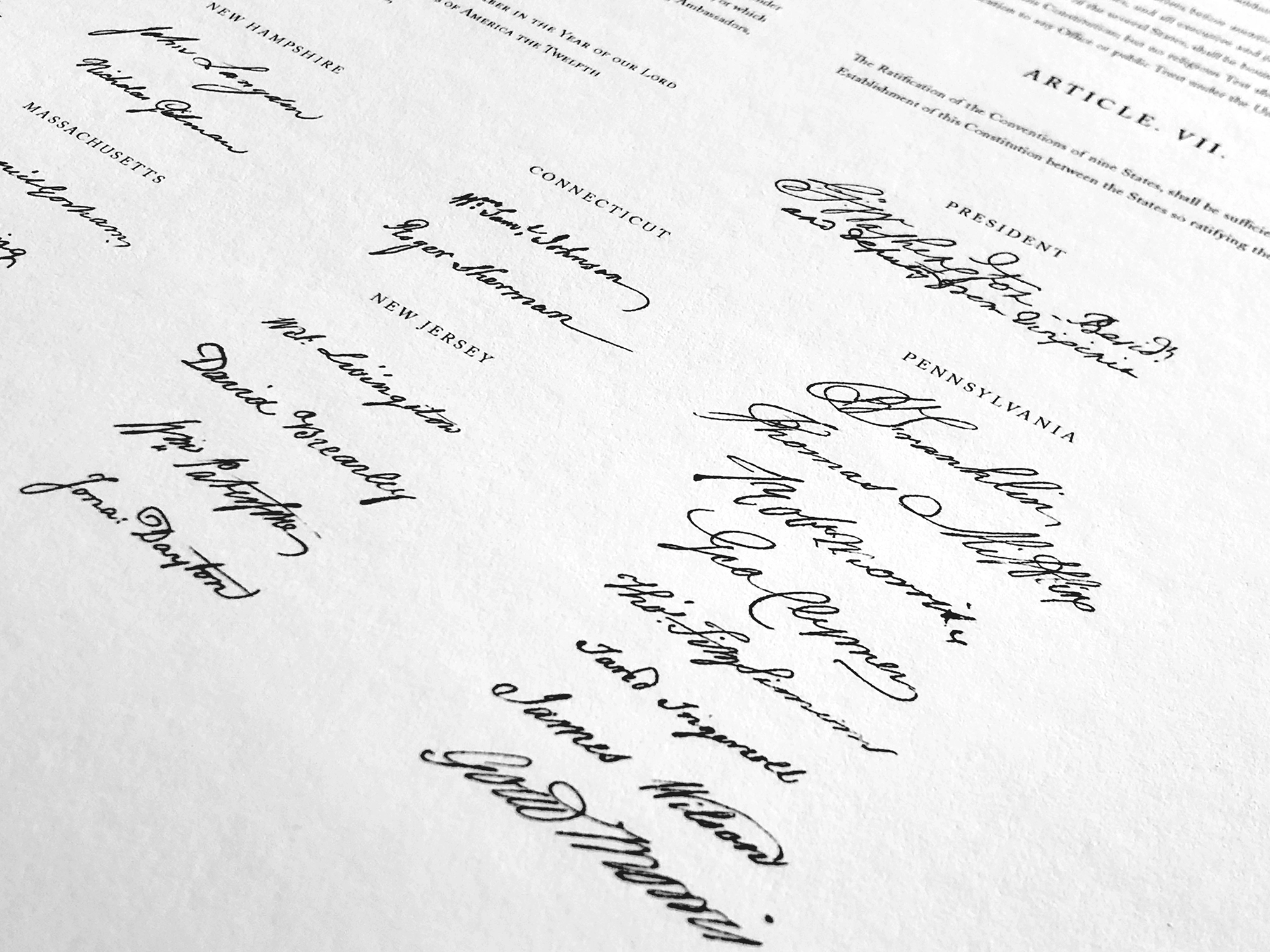
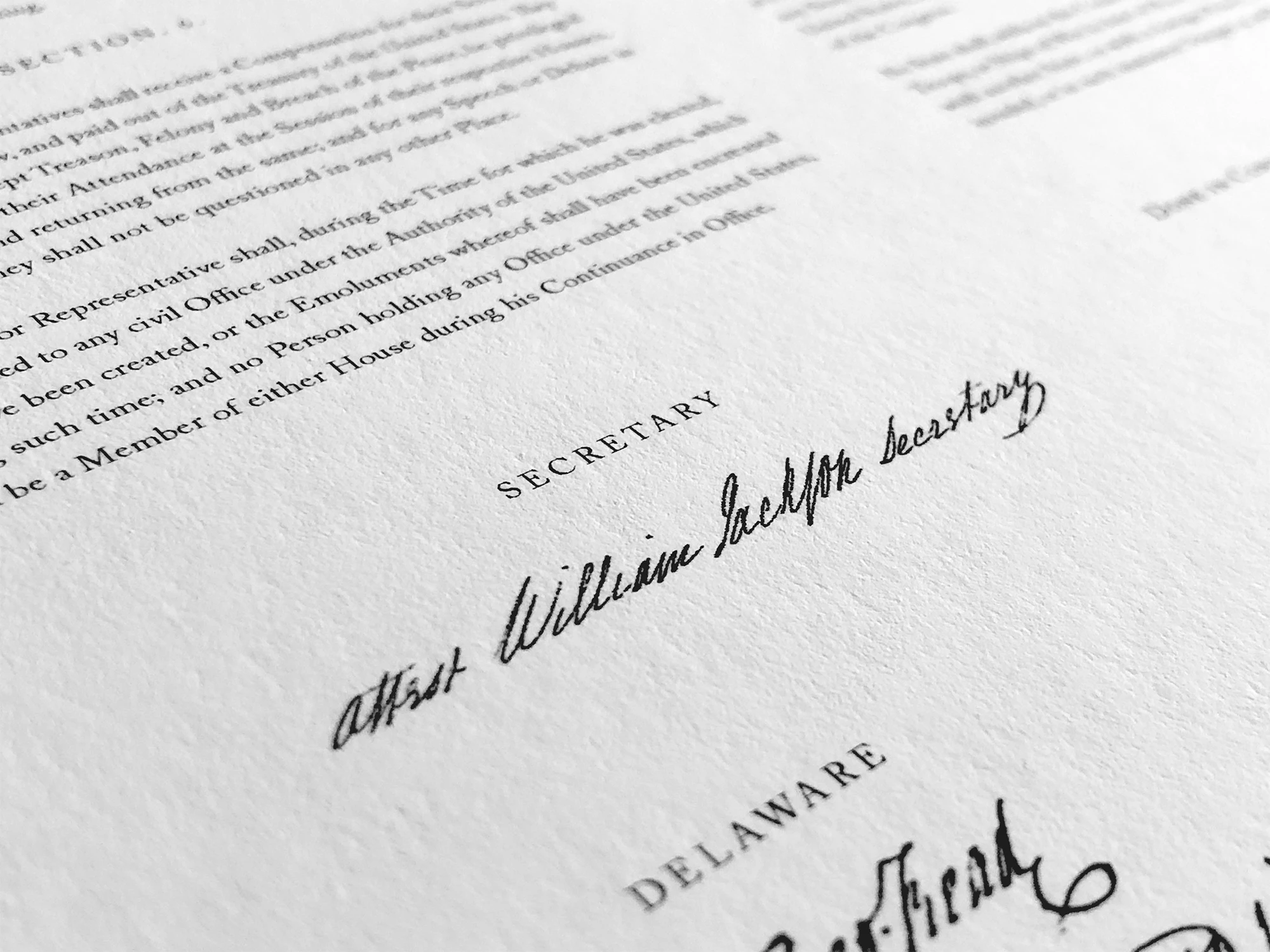
The Broadside of the Constitution features the full text of the official Engrossed Constitution, accompanied by facsimile signatures of the thirty-nine Signers and Secretary William Jackson.
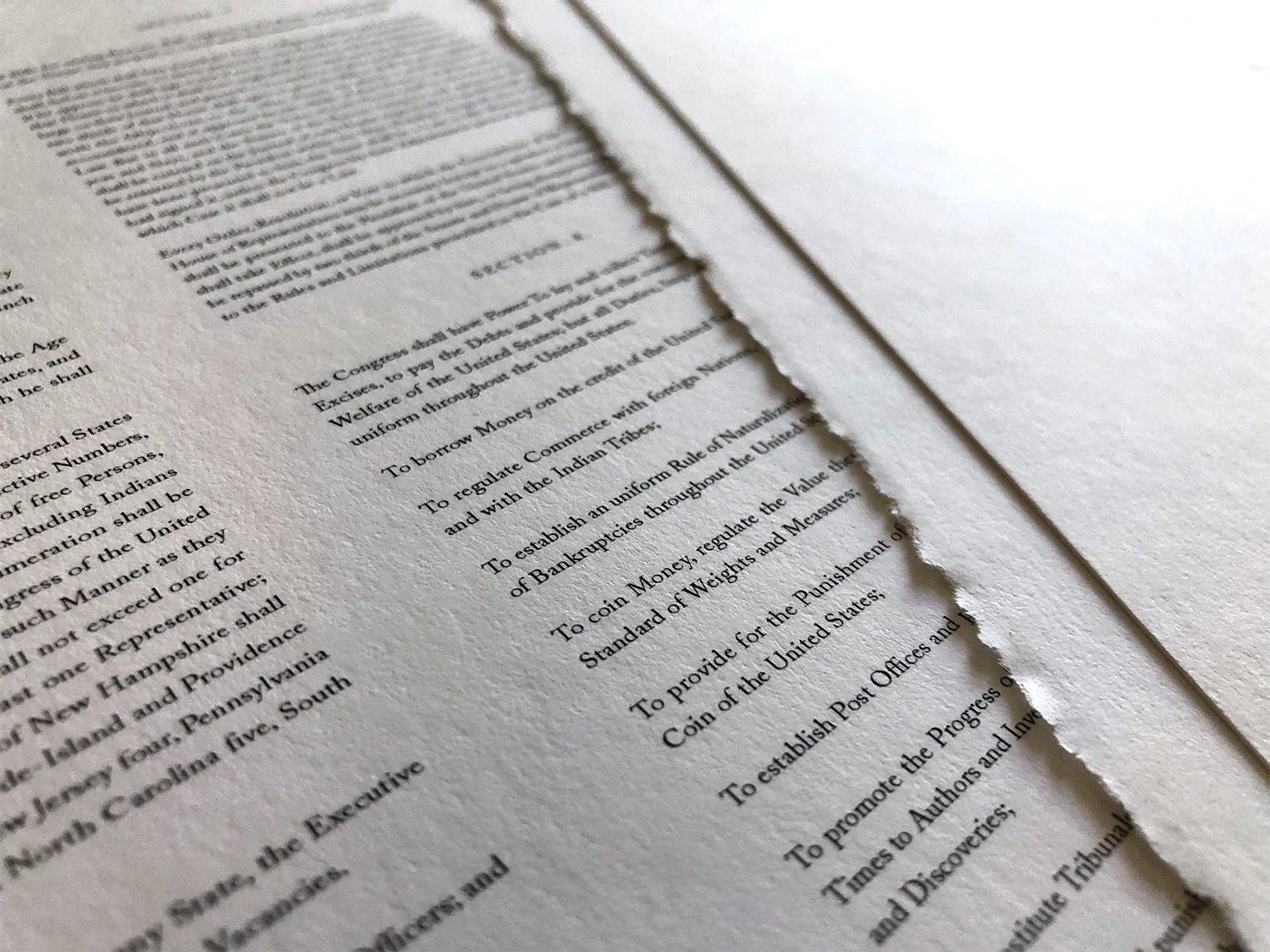
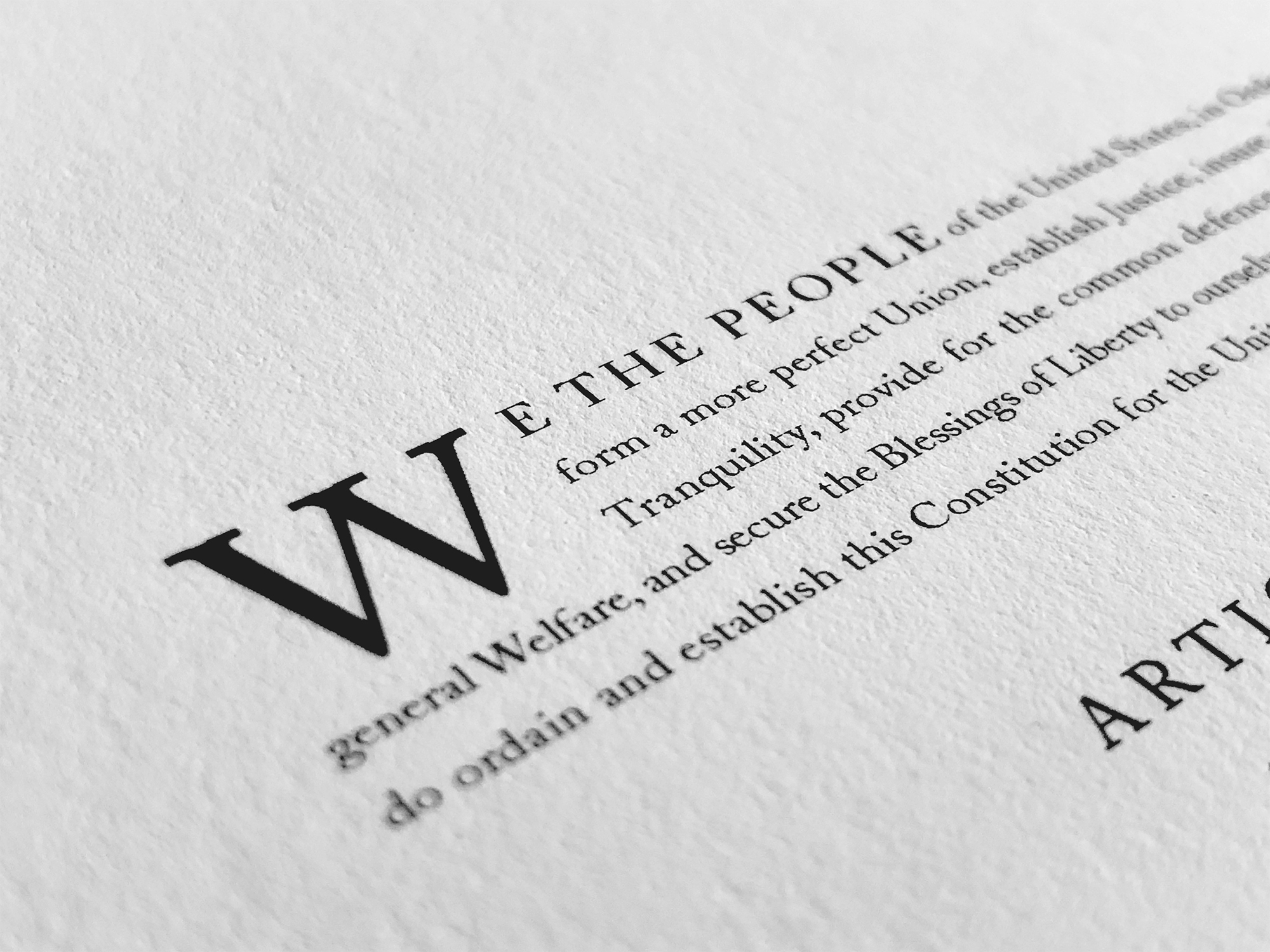
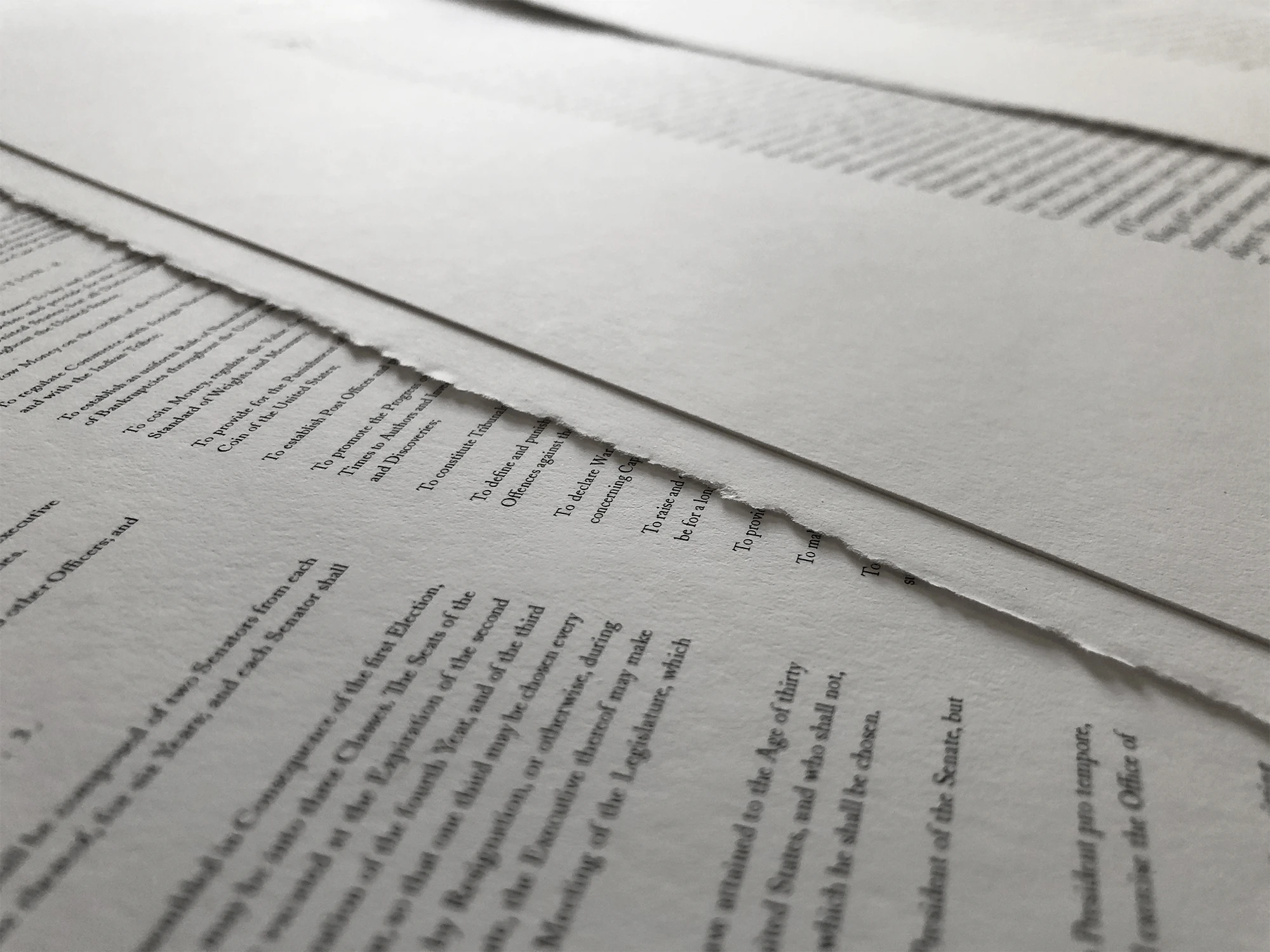
With a refinement that can be seen and felt, the museum-grade fine-art paper has a smooth uncoated matte surface designed for heirloom printing. Contrasting the crisp white of the 100% cotton paper, the use of archival black ink preserves the naturally archival quality of the cotton fibers, allowing the Broadside to endure for generations to come.
As a statement piece, the Broadside measures 32.5"x20.5" and is designed to rest just within the proportions of a 3'x2' frame, allowing the attractive clean cut or deckled edges to remain visible.
Careful study, intentional design and a thoughtful consideration for the history of each document ensure the Rothridge Broadsides of America’s Founding Documents are a sincere tribute to America’s history and her Founding Fathers.
- Engrossed Constitution Text
- William Jackson Signature
- Facsimile Signatures
- Caslon Typeface
- Official Title
- Fits 3'x2' Frame
Museum-Grade
Considered selection of paper, ink and printing process ensure a print with exceptional fidelity that will last for generations.
20.5"W • 32.5"H
100% Cotton
Archival
Made In U.S.A.
Discover the Broadside
"Let the American youth never forget that they possess a noble inheritance, bought by the toils, and sufferings, and blood of their ancestors; and capable, if wisely improved, and faithfully guarded, of transmitting to their latest posterity all the substantial blessings of life, the peaceful enjoyment of liberty, property, religion, and independence. . . . It may, nevertheless, perish in an hour by the folly, or corruption, or negligence of its only keepers, THE PEOPLE.”
Commentaries on the Constitution of the United States 2nd Edition
Published Posthumously 1851
250
Years
of America
Semiquincentennial Printings
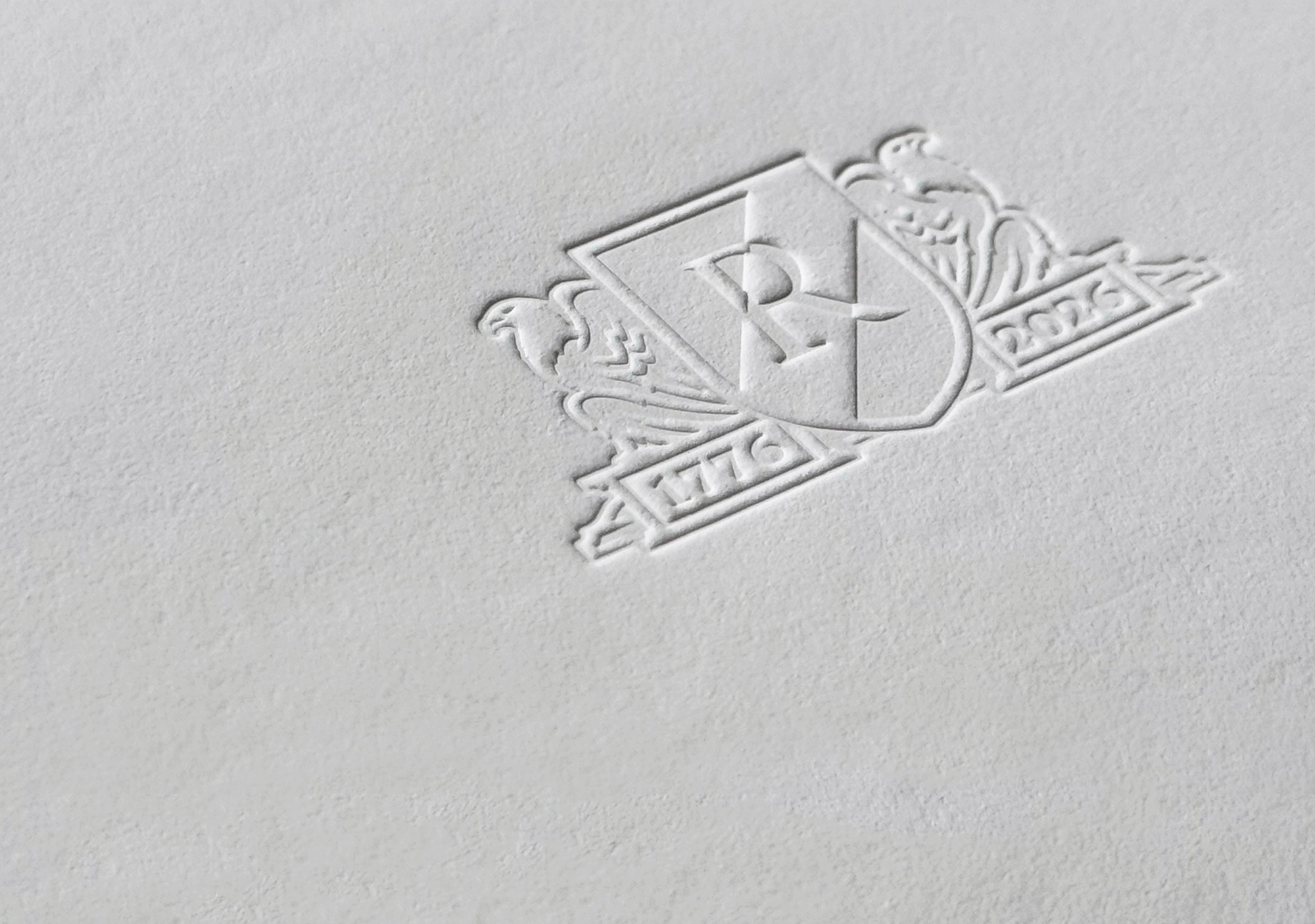
Commemorating America’s 250th year of Independence, each broadside printed this year bears the semiquincentennial crest.
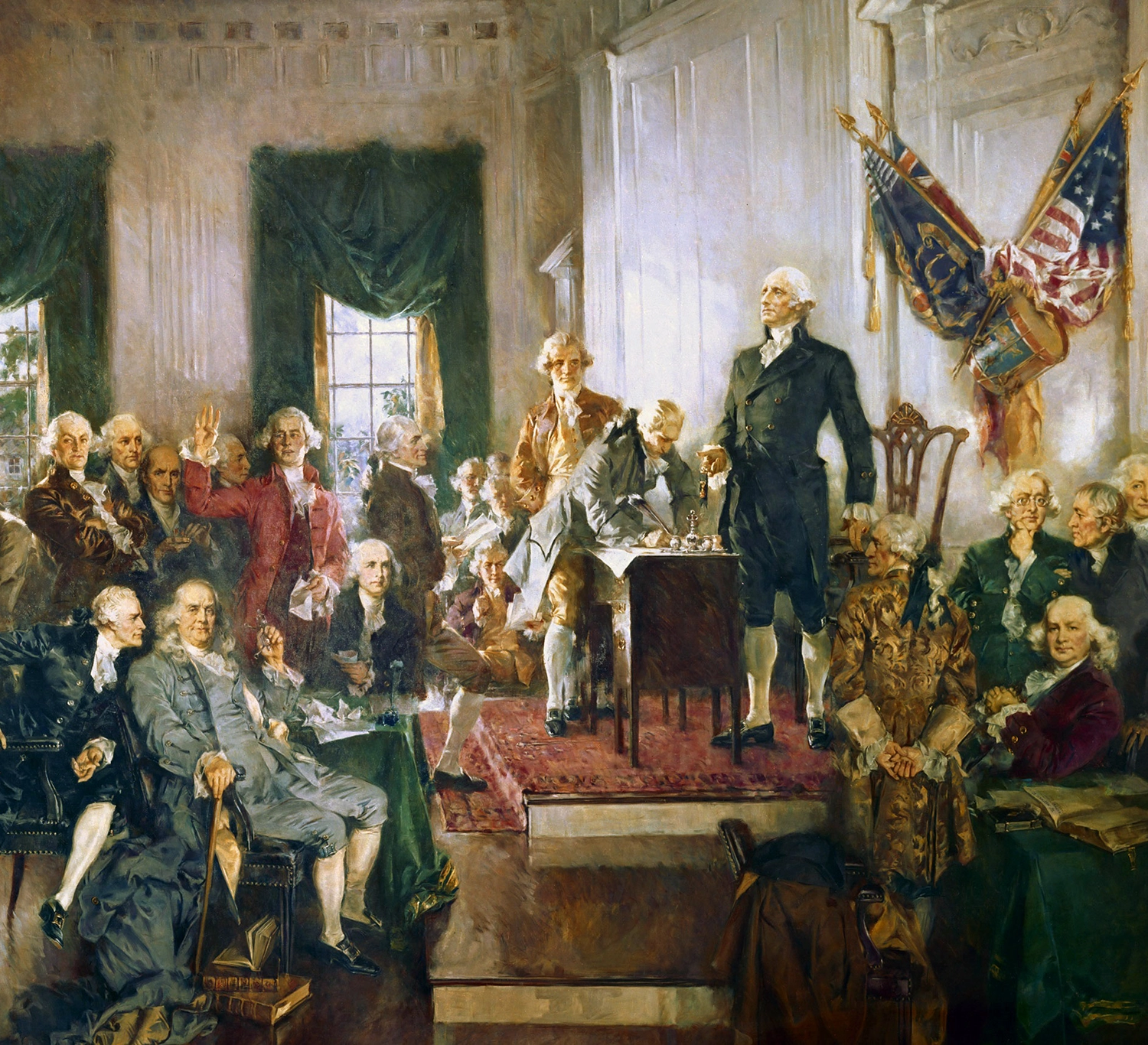
Signing of the Constitution | Howard Chandler Christy
House Wing, East Stairway U.S. Capitol Building
Intended to be painted as part of the sesquicentennial celebration of the Constitution in 1937, the resolution authorizing the commission was delayed until 1939. The painting was completed in 1940 after seven months of painting.
1940 | 20' x 30'
Make Manifest
Our Unanimity
Signatures
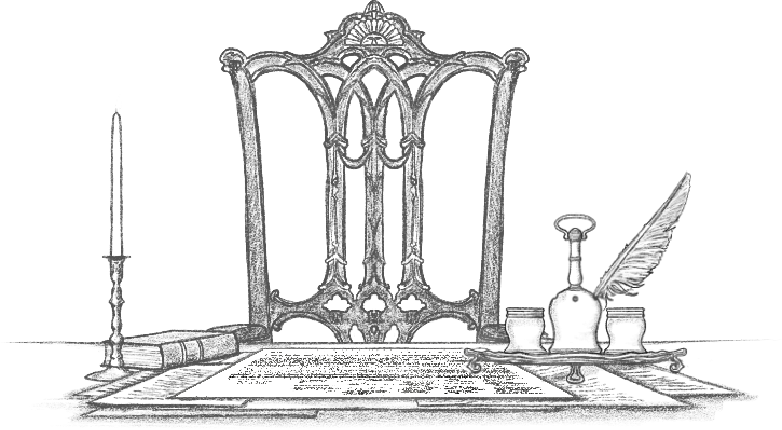
As each of the Signers took a quill pen from the Syng Inkstand, their impressive signatures would often overlap one another, a rather poetic example of E Pluribus Unum.
To display the Signers’ names individually, the delicate process of extracting each signature was required. The study of historic documents containing the men’s signatures provided a further understanding of how each man wrote his name, ensuring that no part was mistakenly removed or added.
The endeavor resulted in a pleasing display of each signature as found upon the original Engrossed Constitution, proportionally accurate to its fellow Signers, organized by state and in order of signing.
“Whilst the last members were signing it Doctr. Franklin looking towards the Presidents Chair at the back of which a rising sun happened to be painted. . . I have, said he, often and often in the course of the Session . . . looked at that behind the President without being able to tell whether it was rising or setting: But now at length I have the happiness to know that it is a rising and not a setting Sun.”
Account written by James Madison
September 17, 1787
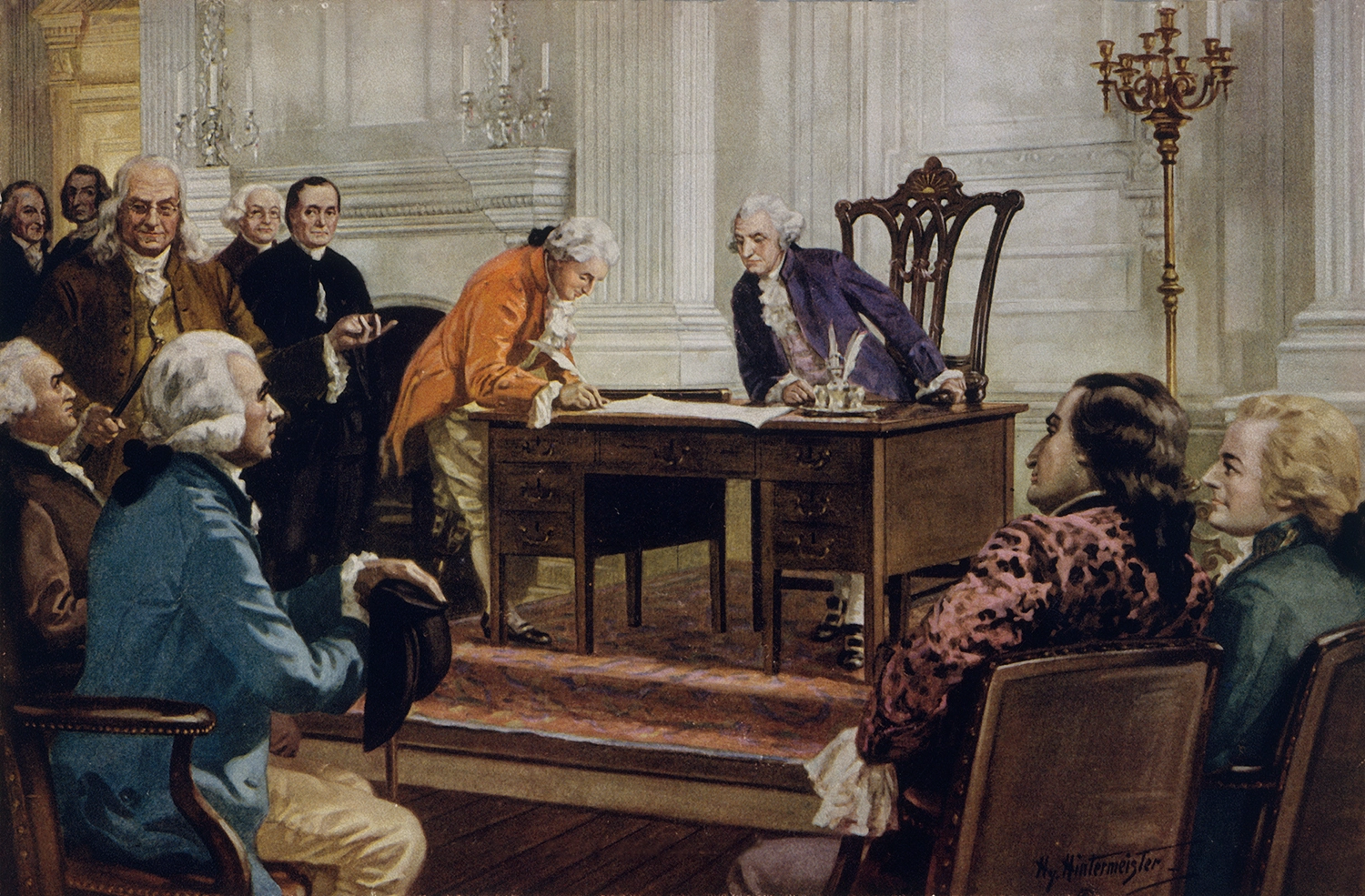
The Foundation of American Government | John Henry Hintermeister
Fraunces Tavern® Museum, New York
Depicting Benjamin Franklin, in conversation with Robert Morris and James Madison, pointing to the Rising Sun Chair where George Washington sits as Gouverneur Morris signs the Constitution with fellow Signers standing behind him. Edmund Randolph and Alexander Hamilton are seated on the right. Reproduction of the original painting by John Hintermeister in the collection of the Fraunces Tavern® Museum in New York.
1925 | 14' x 37.5'
Rallying 'Round
Our Liberty
Consent of States
September 20, 1787, the hard won unity of the Convention was presented to Congress as the Engrossed Constitution.
In the months to follow, Founding Fathers, State Legislatures and the American people would debate the Constitution’s ratification, a caution of government still ever present following the heartache of the revolution. In time, America came to discover the “miracle” that took place at Independence Hall.
On June 21, 1788 the endeavor to create “a more perfect Union” was realized as the ninth state ratification, required by Article VII, was met by New Hampshire. The Constitution had became the supreme law of the land.
Printed Drafts
August 4 - September 12, 1787
On May 24, 1787, a quorum of seven states having assembled, the Constitutional Convention commenced in Philadelphia at Independence Hall. As the work of the Convention proceeded, the official printers to Congress John Dunlap & David Claypoole would work to produce the various drafts of the Constitution.
August 4-6th, the first printed draft known as The Committee of Detail Report was made available, containing the work of committee members: Rutledge, Randolph, Ellsworth, Wilson and Gorham.
Seven-Page Folio 15.55” x 9.9”
September 8-12th, The Committee of Style Report was ordered printed as the second draft, following the work of committee members: Johnson, Hamilton, Morris, Madison and King.
Four-Page Folio 15” x 9.7”
Engrossed Constitution
September 15 - 17, 1787
The official Constitution of the United States of America, housed in the National Archives. Signed on September 17, 1787 by thirty-nine Delegates and the Convention Secretary. The signing taking place in the East Room of Independence Hall in Philadelphia.
Engrossed upon five parchment sheets by the talented Jacob Shallus, who was conveniently upstairs serving as the Assistant Clerk of the Pennsylvania General Assembly. Four sheets comprising the Constitution, with the Resolution upon the fifth.
Following the signing, Secretary William Jackson was directed to deliver the Engrossed Constitution, with the accompanying Convention Resolution and Washington’s Letter to the Confederation Congress in New York. He arrived on September 19 and was given the honor of reading the Constitution aloud to the members on September 20 at Federal Hall.
The accompanying Resolution included the opinion of the Convention that the Constitution be submitted to the states “for their Assent and Ratification.”
Five Parchment Sheets 28.75” x 23.6”
DUNLAP & CLAYPOOLE Folios
September 15 - 18, 1787
“Ordered to be engrossed and 500 copies struck” on September 15 and laid before the Convention. The final printed copies of the Convention and the Engrossed Constitution were prepared and supervised by the Committee of Style and Arrangement.
Printed by Dunlap & Claypoole of Philadelphia, the 6 page folios were presented to the members on September 18 prior to their return to their respective states. This would be the source text of the Constitution that made its way to the various printers and newspapers throughout the states.
The Dunlap & Claypoole Folios were also given to the members of Congress in New York, likely being brought to the Congress by William Jackson alongside the Engrossed Constitution.
6 Page FOLIOS 16.1" x 10"
John McLean Folios
September 28, 1787
Following the opinion of the Convention, Congress resolved on September 28 that the Constitution be “transmitted to the several Legislatures.” Printer John McLean of the Independent Journal in New York, who was later joined by his brother Archibald in publishing The Federalist Papers, was employed to print the one hundred copies ordered by Congress, publishing the folios on behalf of Dunlap & Claypoole.
Produced from McLean’s September 22 printing, the work was supervised by Congress Secretary Charles Thomson, who ensured the text adhered to the Dunlap & Claypoole Folios. Thomson was known for his accuracy, having also served as Secretary during the signing and printing of the Declaration of Independence.
4 PAGE FOLIOS 15.75" x 11"
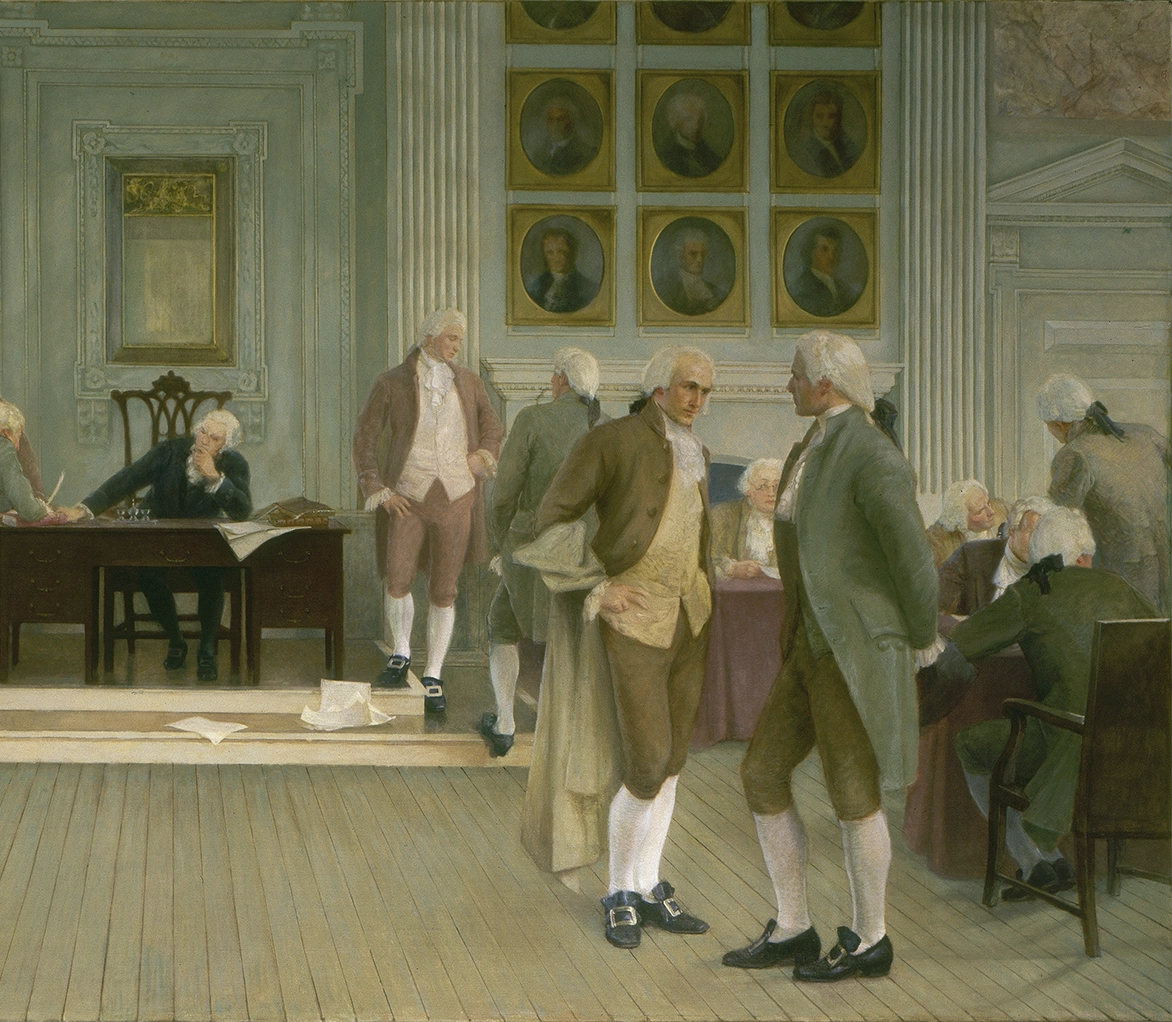
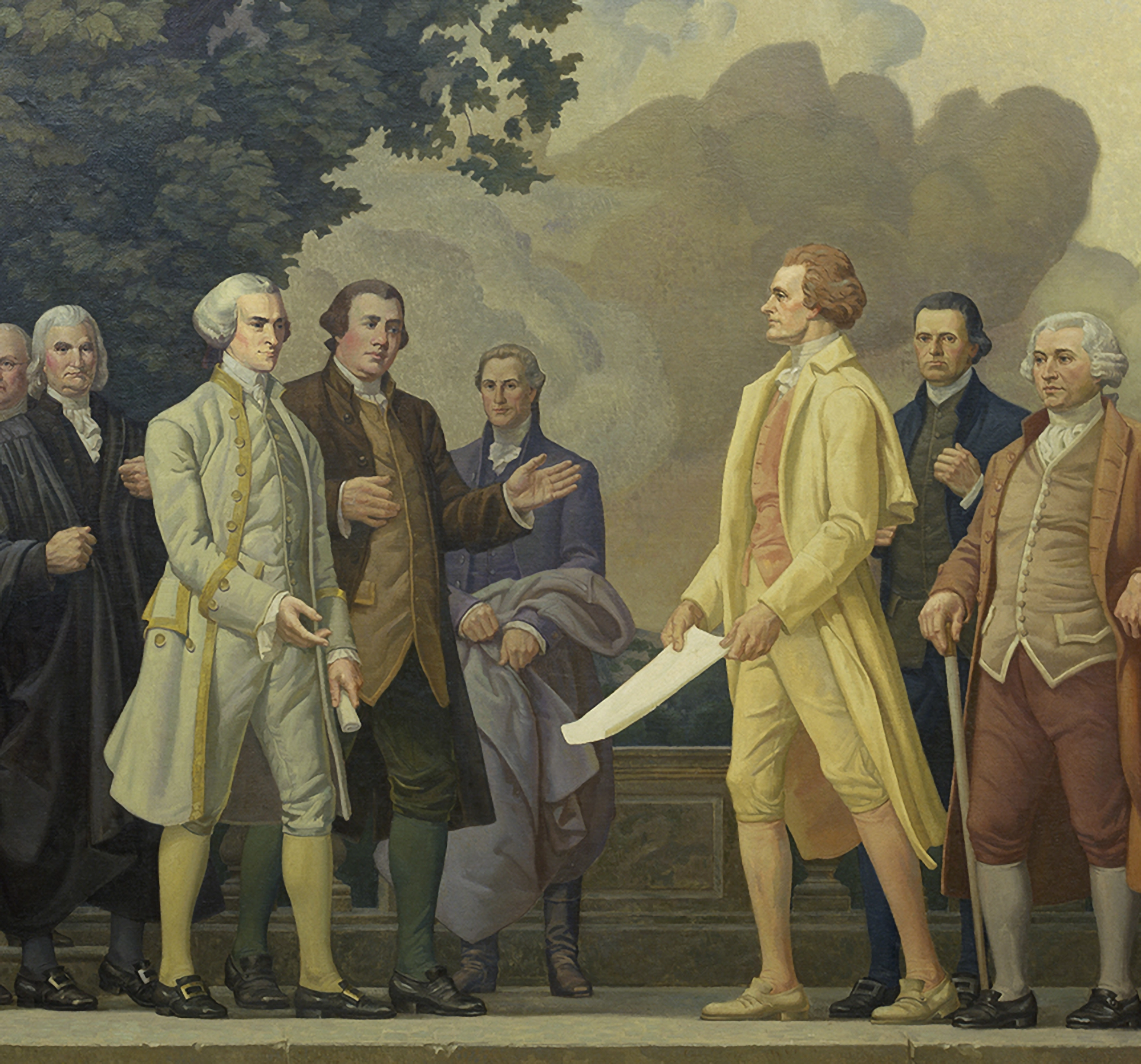
Detail of The Signing of the American Constitution | Albert Herter
Wisconsin Historical Society, WHI-(W01324S)
Found upon the west wall of the Wisconsin Supreme Court, this section of the mural depicts James Madison and Alexander Hamilton in conversation during the Constitution’s Signing. Thomas Jefferson is also depicted in the background, though he was in France at the time of the Constitutional Convention.
1910 | 9' x 18.5'
“The real wonder is, that so many difficulties should have been surmounted; and surmounted with an unanimity almost as unprecedented as it must have been unexpected. It is impossible for any man of candor to reflect on this circumstance, without partaking of the astonishment. It is impossible for the man of pious reflection not to perceive in it, a finger of that Almighty Hand which has been so frequently and signally extended to our relief in the critical stages of the revolution.”
Publius • Federalist Number 37
January 11, 1788
A Youth of
Great Honor
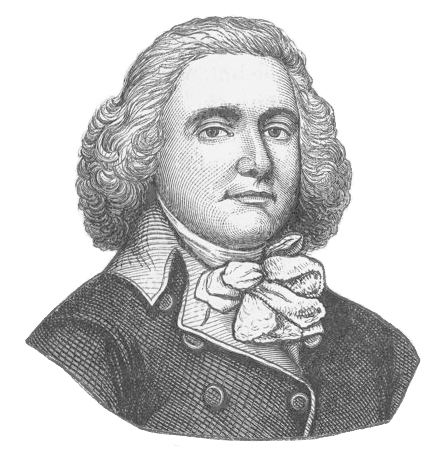
William Jackson
Orphaned in his infancy and brought from England to Charleston, South Carolina. Enlisting in the war for Independence at the age of sixteen, advancing the rank of Major.
As a humble law student in 1787 Philadelphia, he served as Secretary of the Constitutional Convention, having been nominated by his close friend Alexander Hamilton. After giving his attestor’s signature upon the Engrossed Constitution, he delivered it to Congress in New York, where he was given the honor of reading it aloud to the delegates.
In recognition of his significant contributions and life of dedicated patriotism, the Rothridge Broadside of the Constitution features Jackson’s signature as the fortieth Signer.
“With pleasure equal to the justice of it, shall declare to you that your deportment . . . has been regulated by principles of integrity and honor, . . . and I embrace the occasion your address has afforded me, to thank you for all your attentions, and for the Services which you have rendered me since you have been a member of my family.”
Upon Jackson's leaving as Washington’s Personal Secretary
December 26, 1791
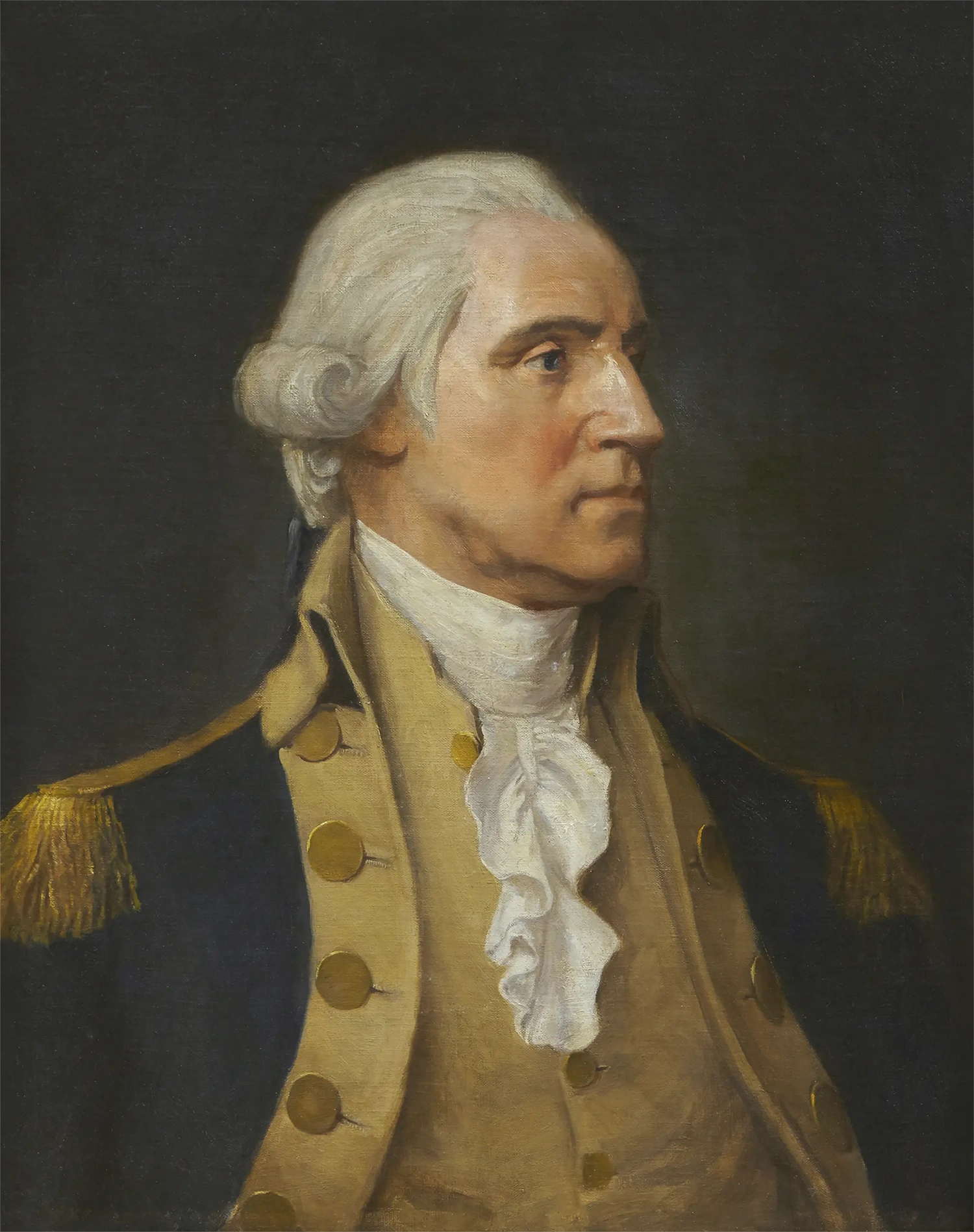
General George Washington | John Ward Dunsmore
Fraunces Tavern® Museum, New York
Depicting George Washington in his role as Commender-in-Chief of the Continental Army. Painted by John Dunsmore who was known for his authenticity of portrayal in his paintings following extensive research.
24" x 18"
This is about the design of the product. It discusses the artistic decisions and style...
A Republic
If you can keep it
In the humid heat of a Pennsylvania summer, the walls of Independence Hall would again bear witness to a sacred event. Representing twelve state legislatures, fifty-five men, with differing backgrounds and opinions, would come together to form the shortest yet longest-lasting document to govern a nation.
The Constitution of the United States was not merely the result of the debates and consensus found in the Constitutional Convention; it was the fruit, nurtured by Divine Providence, of blood-stained earth that nourished the first seedlings of American Freedom.
As heirs of this solemn liberty, indivisible from responsibility, we express respect and admiration to our forebears, known and unknown.