Printing History

The making of a Rothridge Broadside

Heirloom Design

Materials & Process

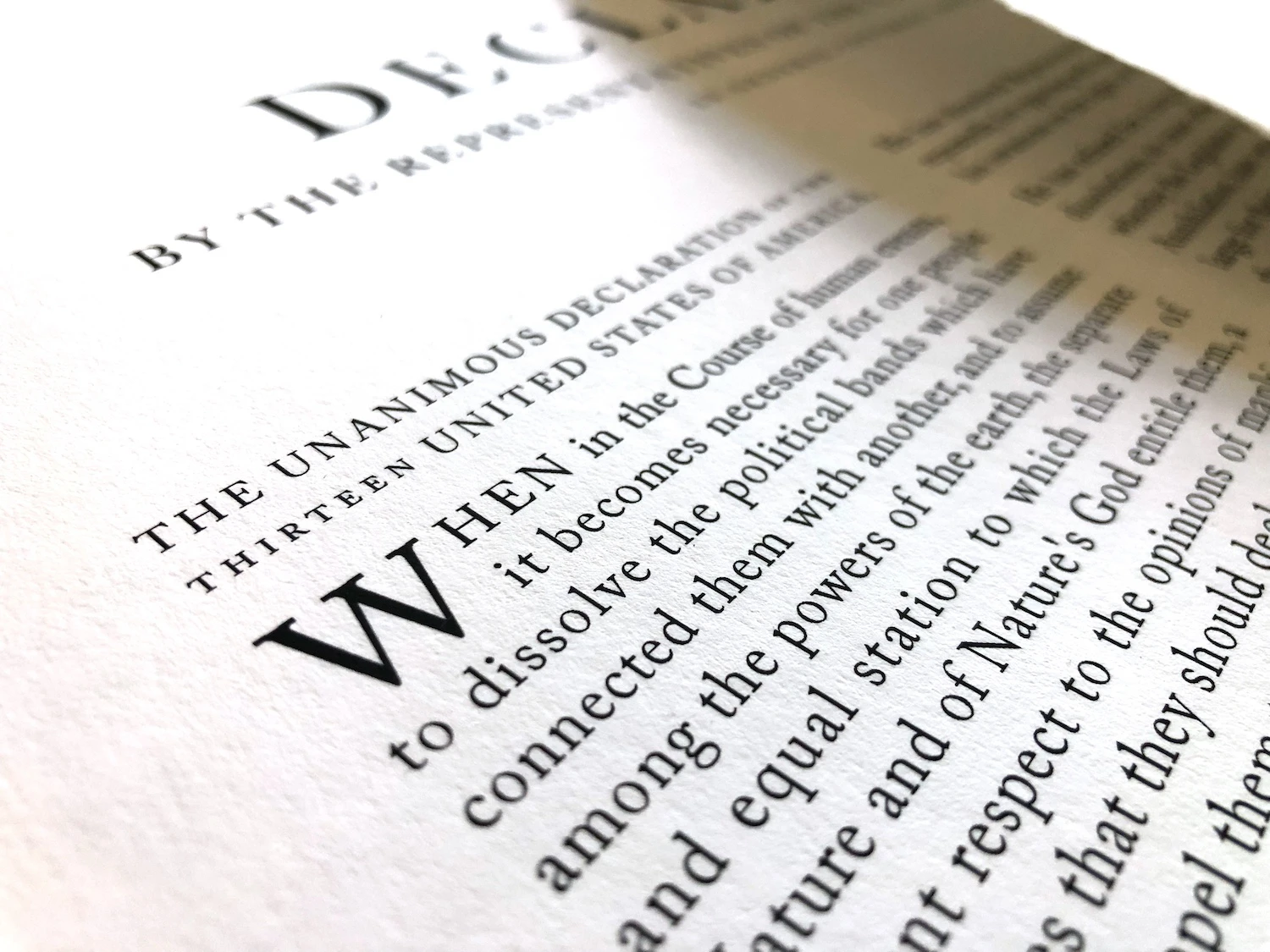
Broadsides displaying America’s founding documents naturally deserve thoughtful attention in their presentation and preservation. As such, each broadside design and printing is the result of careful study, refined details and a meticulous process that ensures it is an appropriate bearer of American History.

Museum-Grade

Considered selection of paper, ink and printing process ensure a print with exceptional fidelity that will last for generations.

32.5"H • 20.5"W

100% Cotton

Archival

Made in U.S.A.

01 / Heirloom Design

Grand Dimensions

32.5"H • 20.5"W

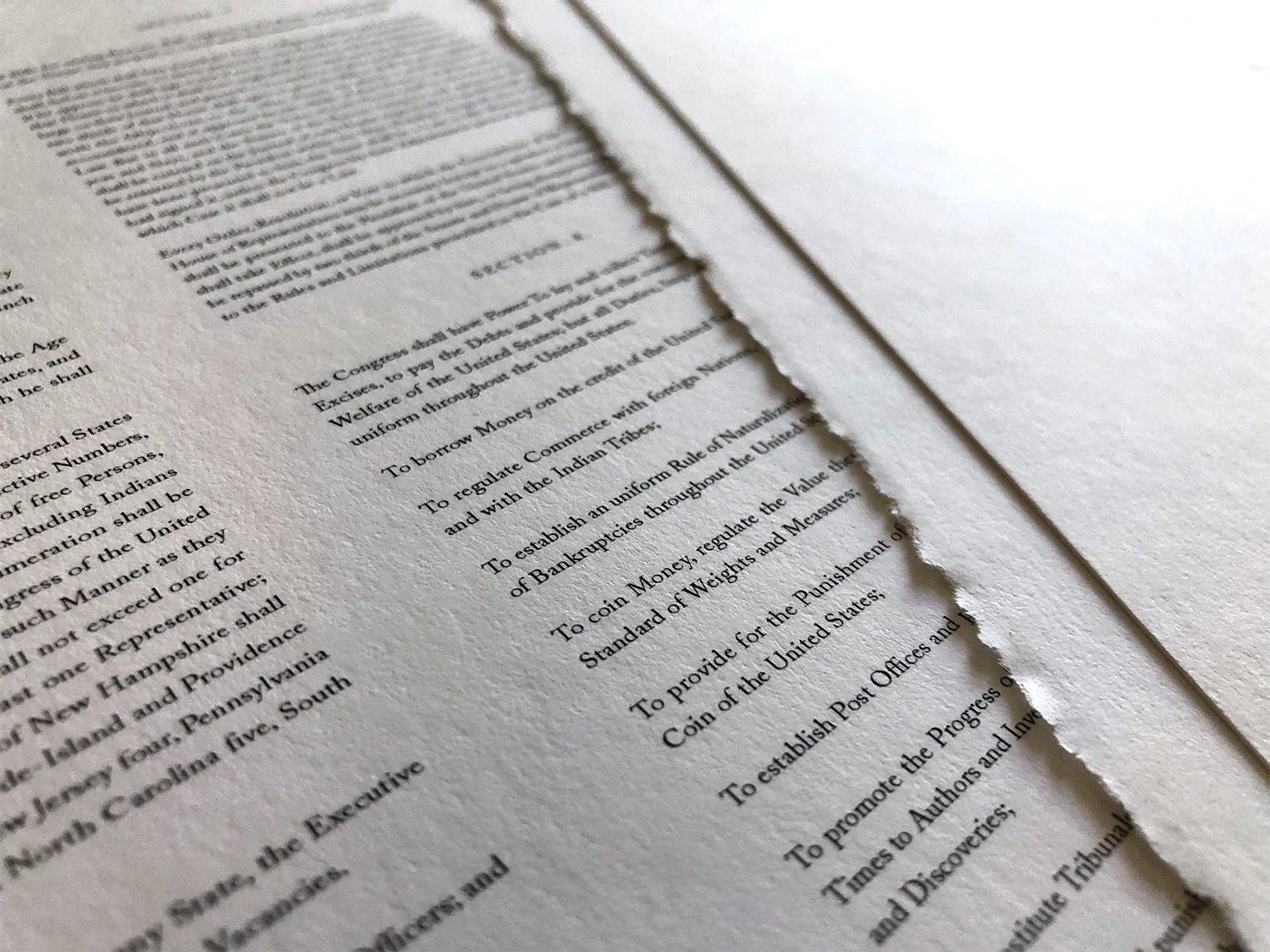
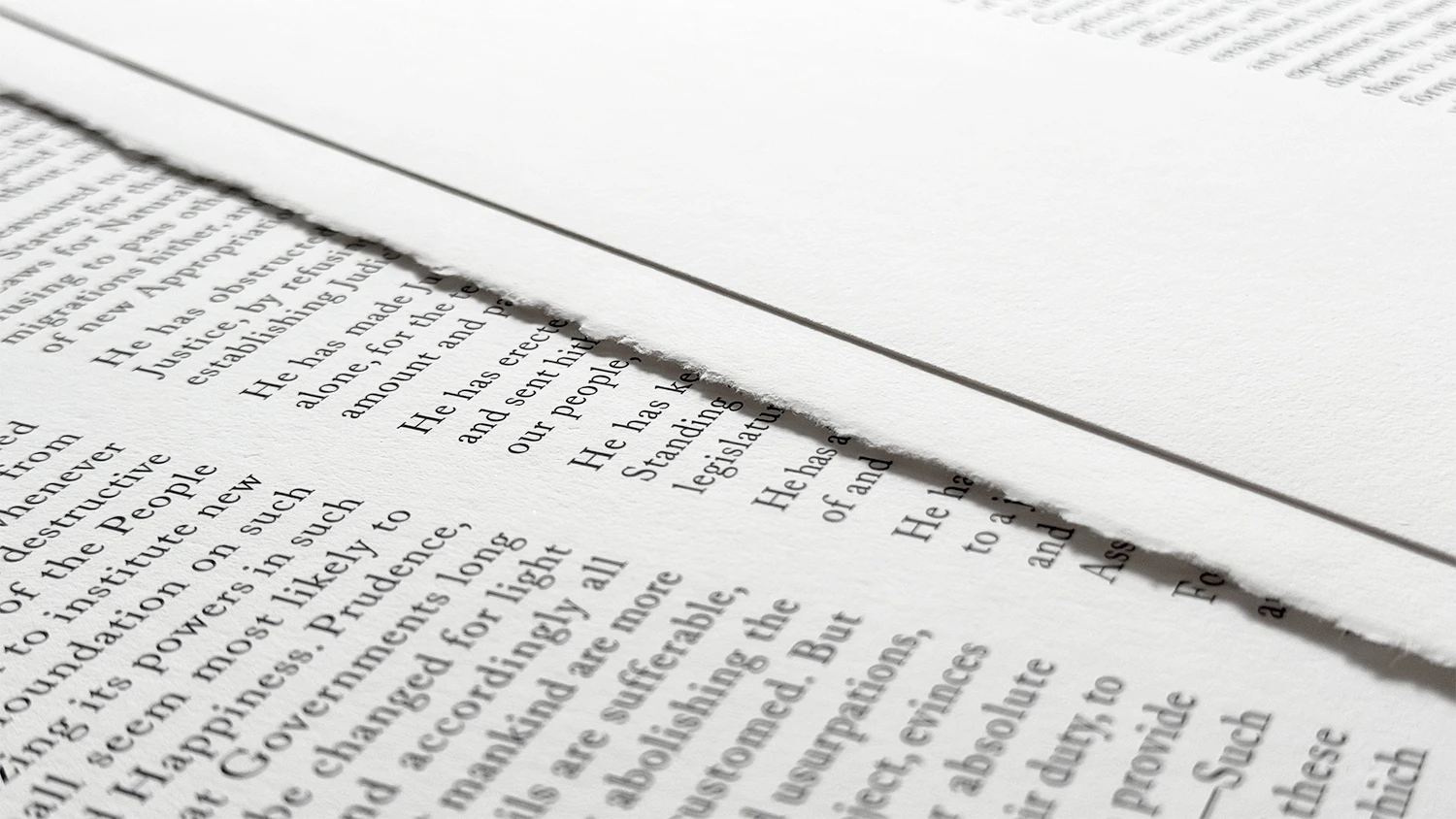
In keeping with traditional broadsides being larger printings, the Rothridge Broadsides measure 32.5"H x 20.5"W. This size allows each to be displayed in a prominent 3’x2’ frame while sitting shy of the frame by 1.75”, a common practice in displaying historic documents, particularly when highlighting a deckled edge.
Dense green forest with sunlight

02 / Heirloom Design

Fine-Art Paper

100% Cotton

Printed upon crisp white fine-art paper made from 100% cotton, showcasing the subtle warmth of its natural appearance. Made in the U.S.A., the museum-grade paper has a smooth uncoated matte surface with a refinement you can see and feel. The cotton fibers make the paper naturally archival, providing the longevity of a true heirloom print.

Open desert road beneath a wide sky

03 / Heirloom Design

Archival

Ink & Printing

Each broadside is printed with archival rich black pigment ink upon fine-art cotton paper designed for precise ink handling and sharp details. The selected materials combined with the proper printing process secure a broadside print that is beautiful and lasting.

Lake surrounded by mountains

04 / Heirloom Design

Edge Preferences

Cut • Deckled

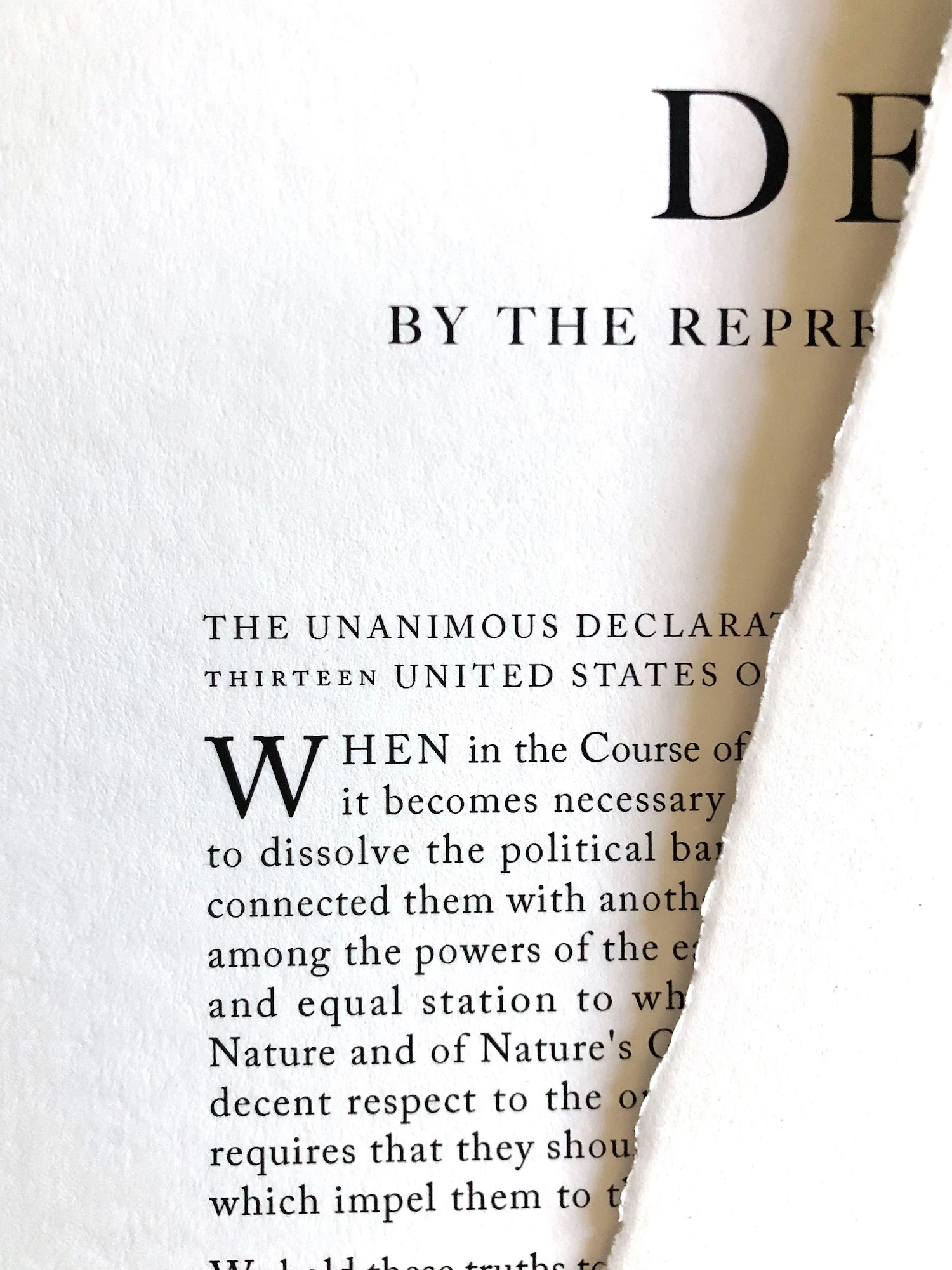
A cut edge with its precise straight lines provides a clean and tidy appearance to the document, while a natural deckled edge showcases an attractive rough perimeter that gives a nod to historical printing.

The option to select a cut or deckled edge allows each broadside to reflect the preferences of its owner. No matter the selection, each option complements the overall design and adds a refined personal touch.

Founding Origins

Research & Sources

To ensure that each broadside bares the accurate titles, text and signatures of the original document, a diligent study of the various drafts, transcriptions, and printings was conducted. This validation process also provided historic insights into individuals, events and records that have allowed the Rothridge Broadsides to be an elegant blend of the history and printings of America’s Founding Documents.

01 / Founding Origins

Epithets of Liberty

Original Titles

The Declaration features both of the official titles ordered by the Second Continental Congress. The document would later be referred to as the Declaration of Independence, though not one of its original titles.

The Constitution, though never ordered a specific title for engrossment and printing, reflects the name given in the Oath of Office as well as the state ratifications where “of America” had been included in the title.

Dense green forest with sunlight

02 / Founding Origins

Eagle-Eyed

Transcripts

A careful study of the Declaration and Constitution ensured each broadside bares the text as found upon the original engrossed documents housed within the National Archives in Washington D.C.

This process not only provided faithful transcriptions, but also helped identify a missing comma in the National Archive’s official transcription of the Declaration, which they promptly corrected when notified.

Open desert road beneath a wide sky

03 / Founding Origins

America’s Typeface

Caslon

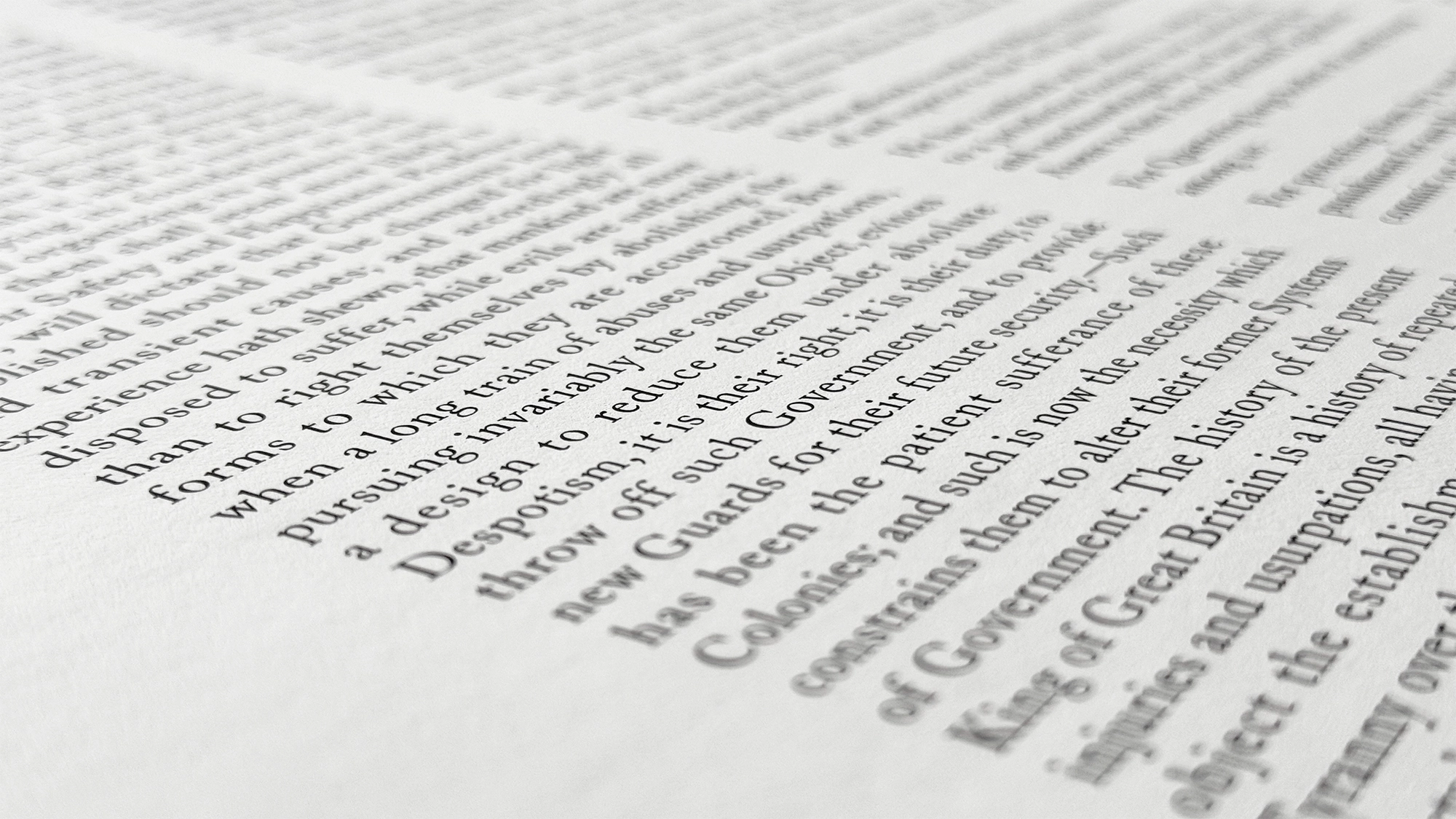
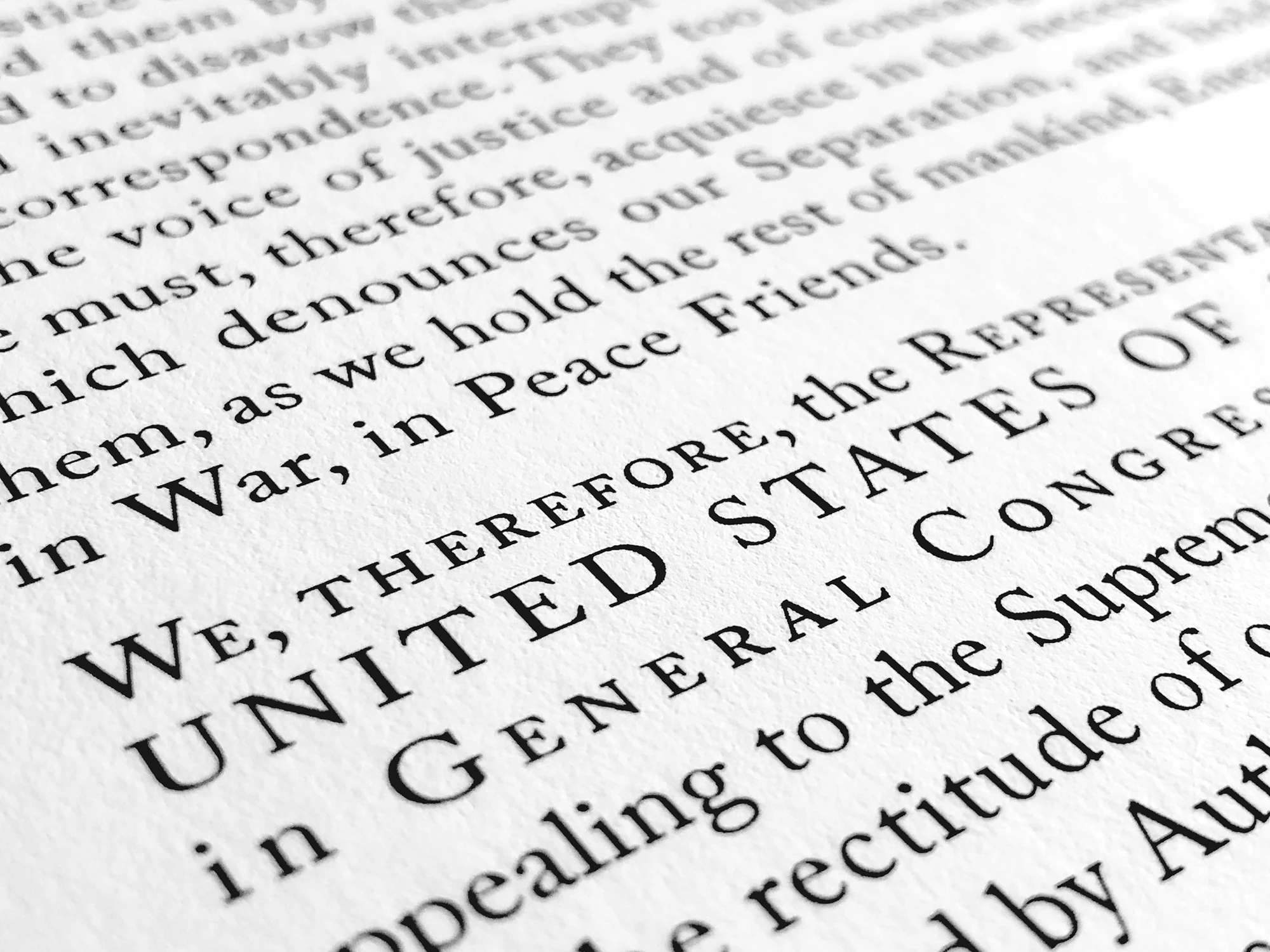
Typeset in Caslon, a revival of the original metal typeface used in the first printings of the Declaration by John Dunlap of Philadelphia, and the Constitution folios, printed by JohnDunlap and David Claypoole.

Originally designed in 1722 by London typefounder William Caslon, the typeface was admired by Benjamin Franklin for its legibility and had it brought to America early after its introduction. The typeface is still used today upon the fuselage of Air Force One.

Lake surrounded by mountains

04 / Founding Origins

Our Sacred Honor

Signatures

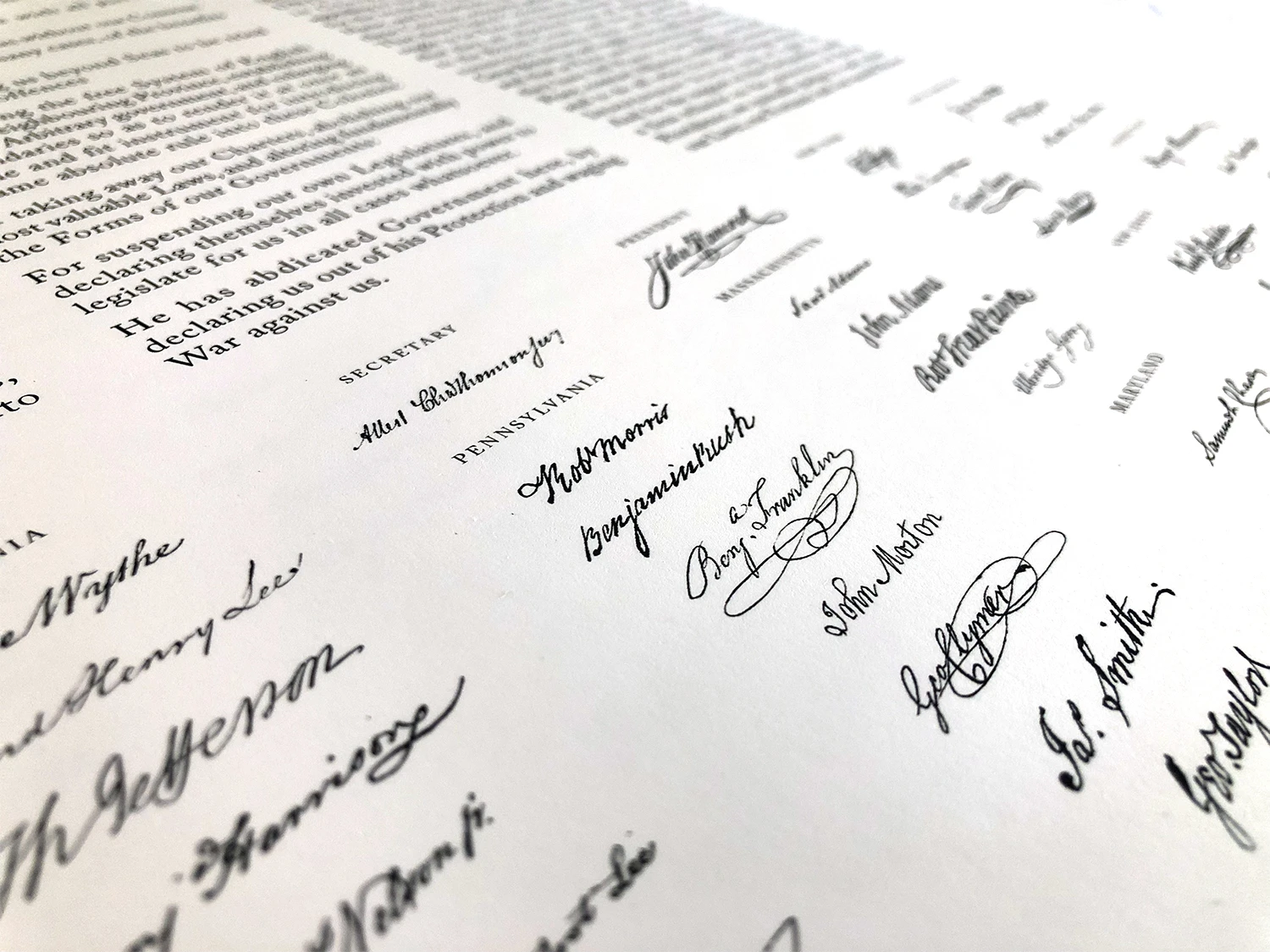
Each signature is a carefully extracted facsimile as it appears on the original document. Each is proportionally accurate to its fellow Signers, organized by state and in order of signing. John Hancock’s famously large signature on the Declaration has been slightly scaled down to preserve aesthetics.

Men of Significance

The Declaration includes the signature of Secretary Charles Thomson and the Constitution includes the signature of Convention Secretary William Jackson.

Learn About The Men

250 Years
of America

Semiquincentennial Printings

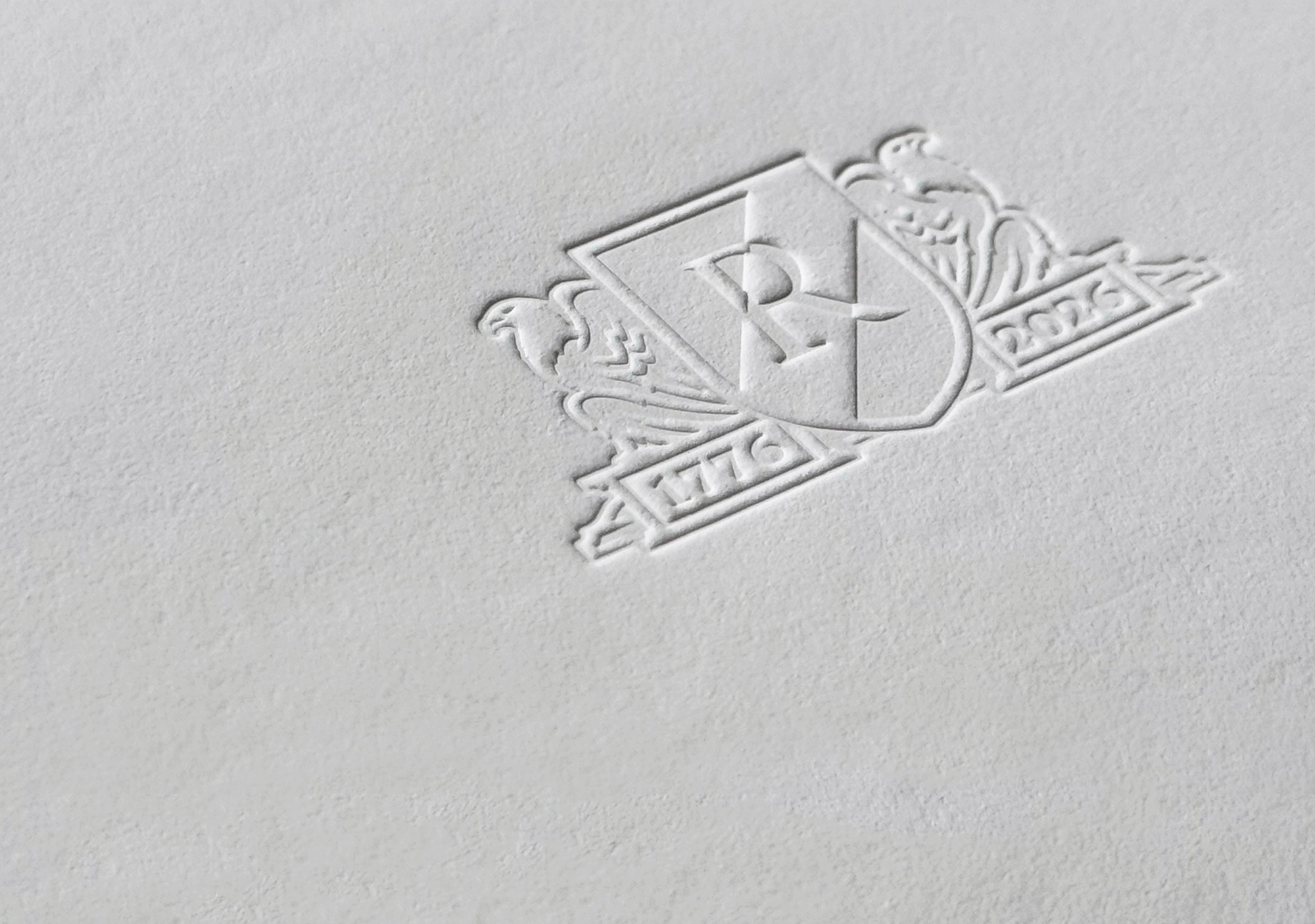
Commemorating America’s 250th year of Independence, each broadside printed this year bears the semiquincentennial crest.

Detailed view of America's 250th Anniversary Crest on Rothridge Broadside

“May they remember how bitterly our freedom was won, the down payment that was made for it, the installments that have been made since this Republic was born, and the price that must yet be paid for our liberty. May freedom be seen, not as the right to do as we please, but as the opportunity to please to do what is right.”

Reverend Peter Marshall

Opening Prayer Excerpt as Senate Chaplain

July 3, 1947